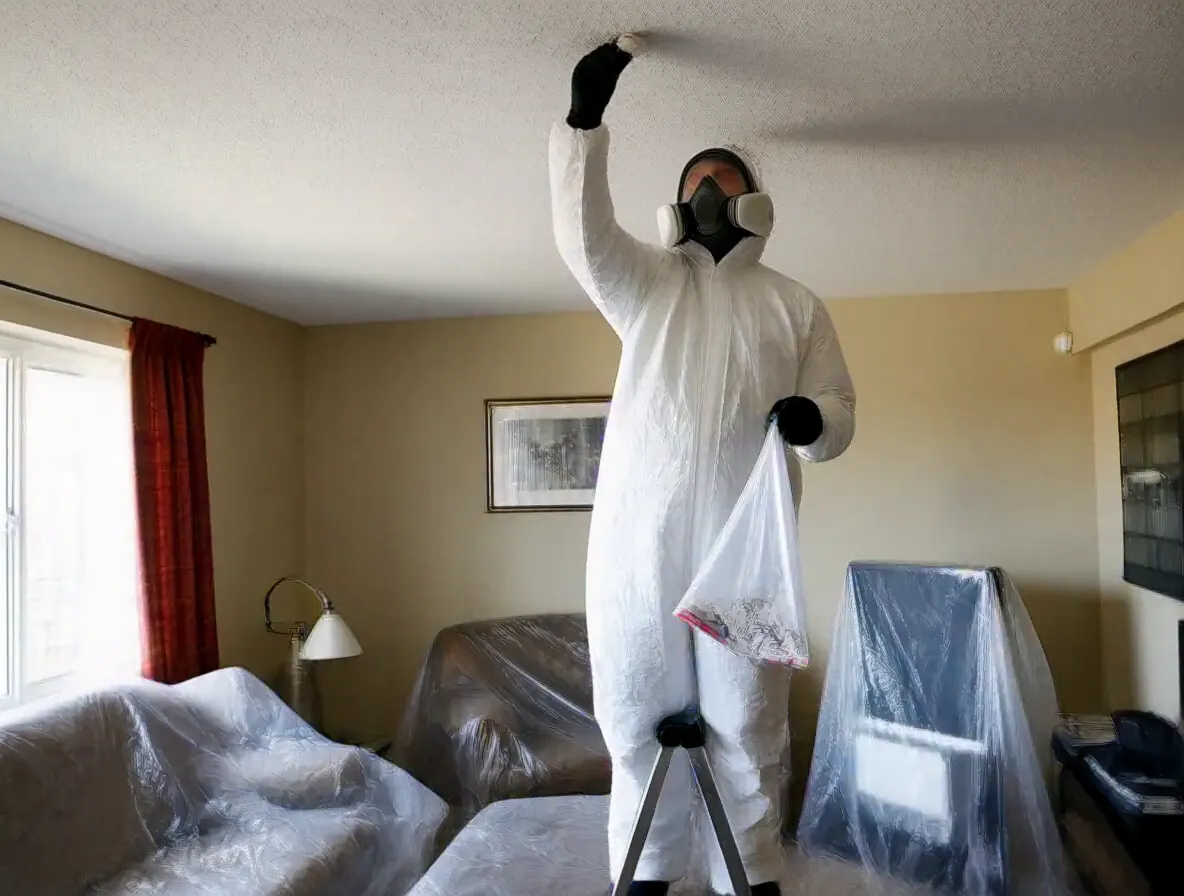
Why popcorn ceilings are the #1 asbestos question
From the 1950s into the 1980s, spray-on “popcorn” or “acoustic” texture was a cheap, fast way to hide imperfect drywall and dampen sound. Many of those textures contained chrysotile asbestos. Across Murfreesboro, Smyrna and Nashville there are thousands of ranch houses, split-levels and older apartments that still have the original ceiling.
Today most people want it gone because it looks dated, collects dust and cobwebs, and is hard to patch. The problem is that the most common DIY method, wetting it and scraping it down, is exactly how asbestos fibers get into the air if the texture contains it.
Don’t scrape first, test first. A lab test costs a fraction of the clean-up bill if an asbestos ceiling gets scraped without containment. Contaminated carpet, furniture and HVAC ducts can be very expensive to clean.
How to tell if your popcorn ceiling has asbestos
You can’t tell by color, texture or feel. These clues tell you how likely it is, not whether it’s there:
- Age of the house or ceiling. Installed before the early-to-mid 1980s? Higher chance.
- Original vs. redone. A ceiling that was re-textured in the 1990s or later is less likely, but older layers may be underneath.
- Glitter. Sparkly 1970s ceilings are a well-known era marker, but glitter itself isn’t asbestos.
- Seller’s disclosure or old inspection reports sometimes mention it.
The answer comes from a lab. An inspector takes a small sample through all the layers of the texture, sends it to an accredited lab, and you get results in a few days, or sooner with rush service.
Your options if it tests positive
1. Leave it alone
If the ceiling is intact, not water-damaged and you’re not planning work, leaving it is a legitimate choice. Avoid drilling into it, hanging things from it or cleaning it roughly.
2. Encapsulate it
A sealant spray or careful painting locks the texture in place. It’s the cheapest way to manage an intact ceiling, but the asbestos remains.
3. Cover it
New drywall or ceiling panels can be installed over the old ceiling. It gives you a smooth, modern ceiling for less than removal, though fastening into the old ceiling still needs care.
4. Remove it professionally
Full removal is the permanent fix and the usual choice before a renovation or sale. A licensed abatement crew will:
- Move or cover furniture and seal the room, including floors, walls, vents and doorways, with plastic sheeting.
- Set up HEPA air filtration to keep the room under negative pressure.
- Mist the texture with water and scrape it into bags while wearing respirators and protective suits.
- Seal, label and haul the waste to a permitted landfill.
- HEPA-vacuum and wet-clean, then confirm with clearance air testing.
- Hand off a bare ceiling ready for skim coating and paint. Some contractors include the finish work or can recommend a drywall finisher.
Popcorn ceiling removal cost
| Ceiling | Typical cost |
|---|---|
| Asbestos test (1–3 samples) | About $50–$300, or more with an inspector visit |
| Non-asbestos popcorn removal | About $1–$3 per sq ft |
| Asbestos popcorn removal (licensed) | About $3–$7 per sq ft |
| Skim coat and paint afterward | Often $1–$3 per sq ft extra |
Prices vary with ceiling height, furniture, how many rooms, and access. See the full cost guide.
What about scraping it myself if it’s negative?
If the lab finds no asbestos in any layer, popcorn removal is a messy but ordinary DIY or drywall-contractor job. Wear a good dust mask, cover everything, and be prepared for patching. Lead paint can also be present on painted ceilings in older homes, so ask the lab or inspector about lead testing if the ceiling has been painted.
Popcorn ceiling testing near you
We arrange popcorn ceiling testing and removal in Murfreesboro, Smyrna, La Vergne, Nashville, Franklin and Brentwood. Call (615) 000-0000 or tell us about your ceiling in the form.