When does asbestos need to be removed?
Not every asbestos material has to come out. Asbestos that is intact and won’t be disturbed is usually safest left in place. Removal makes sense when:
- You’re renovating or demolishing and the work would cut, sand, drill or break the material.
- The material is damaged or deteriorating: crumbling pipe wrap, water-stained popcorn ceiling, broken tiles, cracked siding.
- You’re selling and the buyer or lender wants it gone.
- You simply want peace of mind, especially with young kids or someone with breathing problems in the house.
If you haven’t confirmed it’s asbestos yet, start with asbestos testing. Many suspect materials turn out to be asbestos-free.
How professional asbestos abatement works
- Inspection and plan. The contractor reviews your test results or inspection report, measures the area and explains the plan, schedule and price.
- Notifications and permits. Where required, the contractor handles notice to the state and any local permits.
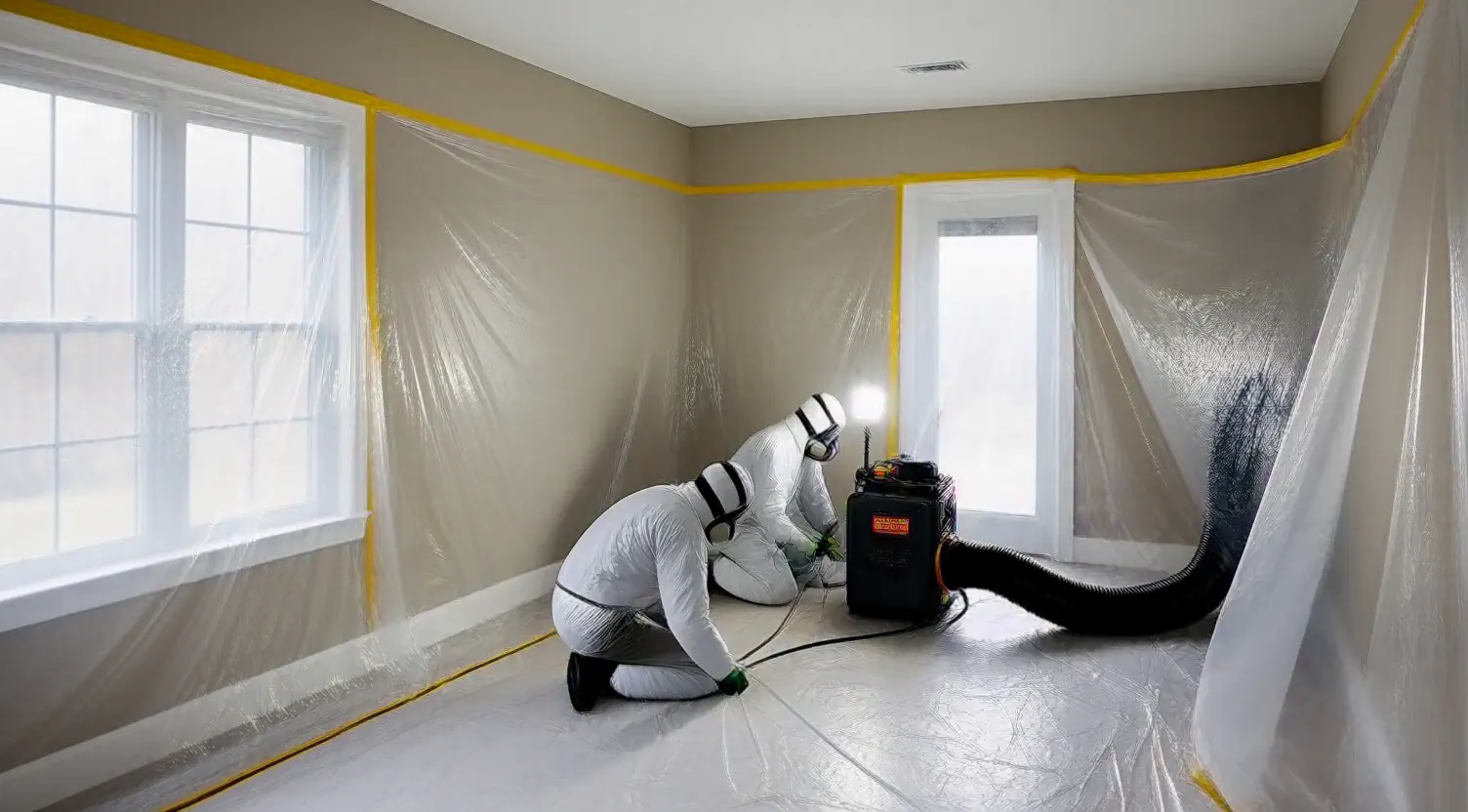
- Containment. The work area is sealed with heavy plastic sheeting. HVAC vents are blocked off, and HEPA-filtered air machines create negative pressure so air flows into the work area, not out to the rest of your home.
- Wet removal. Workers in respirators and protective suits wet the material to keep fibers down, remove it carefully and bag it immediately.
- Sealed disposal. Waste is double-bagged or wrapped, labeled and taken to a landfill permitted to accept asbestos.
- Cleaning and clearance. Every surface is HEPA-vacuumed and wet-wiped. Air samples confirm the area is clean before the containment comes down.
What we can help remove
- Popcorn ceilingsRemoval or encapsulation of acoustic ceiling texture.
- Floor tile & mastic9×9 tile, sheet vinyl and black adhesive.
- InsulationVermiculite, pipe wrap, boiler and duct insulation.
- Siding & roofingCement-asbestos shingles and panels.
Contractors also handle asbestos in drywall and joint compound, plaster, window glazing and caulk, HVAC duct tape, and debris left after fire or water damage.
Removal, encapsulation or enclosure?
| Option | What it means | Best for |
|---|---|---|
| Removal | The material is taken out completely. | Renovations, demolition, damaged material, home sales. |
| Encapsulation | A sealant coats or penetrates the material so fibers can’t escape. | Intact pipe wrap or ceilings you won’t disturb. |
| Enclosure | The material is covered, for example new flooring over old tile or drywall over a ceiling. | Floors and ceilings in good condition, tighter budgets. |
Encapsulation and enclosure cost less up front, but the asbestos is still there. You may need to deal with it later and disclose it when you sell.
What does asbestos removal cost?
Removal prices depend on the material, how much there is, how easy it is to reach and how much containment the job needs. As a rough guide for Middle Tennessee:
- Small jobs (a closet, a small bathroom floor) often start around $1,000–$2,000 because of setup and disposal minimums.
- Popcorn ceiling removal is often around $3–$7 per square foot.
- Floor tile and mastic removal is often around $3–$8 per square foot.
- Whole-house or multi-material projects can run $5,000–$20,000+.
Get the full breakdown in our asbestos removal cost guide. Getting two quotes is always a good idea; we can connect you with more than one contractor where available.
Tennessee asbestos rules, permits and notices
Asbestos rules in Tennessee come from the federal EPA, the Tennessee Department of Environment and Conservation (TDEC) Division of Air Pollution Control and, in Davidson County, Metro Nashville’s health department. What applies depends on the building and the project. In plain terms:
- Inspection first. Before regulated renovation or demolition work, the owner has to find out whether asbestos is present, and the inspector must be accredited by the state.
- Demolition notice. For regulated buildings, TDEC asks for written notice at least 10 working days before a demolition starts, on its form CN-1055, even if no asbestos is found.
- Larger removals. Renovations that remove regulated asbestos above set amounts (260 linear feet of pipe, 160 square feet of surfaces or 35 cubic feet) need the same 10-day notice.
- Nashville and Davidson County. Metro Public Health’s Pollution Control Division enforces asbestos rules there. It wants the asbestos survey, a notification and a permit fee before work that will disturb asbestos, and it inspects before, during and after removal.
- Waste paperwork. Asbestos waste is sealed, labeled and sent with a waste shipment record to a landfill that accepts it.
What about a single-family house? Under the federal rules, a single home with four or fewer units is generally exempt from these notices. That changes when several houses are torn down as one project, when the work is part of a commercial job, or for buildings with five or more units. Even when your home is exempt, contractors still have to protect their workers under OSHA rules, asbestos waste still has to go to a landfill that accepts it, and many contractors want a survey before they start.
The details change with the project. A licensed abatement contractor handles the notices and permits as part of the job, so ask about it when you compare quotes. For questions about the state rules, TDEC’s asbestos program can be reached at (615) 532-6828.
Questions to ask any abatement contractor
- Are you and your supervisor accredited for asbestos abatement, and can I see current certificates?
- Do you carry asbestos-specific liability insurance?
- Who handles state notification and disposal, and will I get disposal paperwork?
- How will you contain the work area and protect the rest of the house?
- Is clearance air testing included, and is it done by an independent party?
- What exactly is included in the price: patching, re-texturing, haul-off?
Warning signs: a “contractor” who offers to remove asbestos without containment, without protective gear, or by dumping it in a regular dumpster. Improper removal can contaminate your home and leave you liable. Licensed pros don’t cut those corners.
Asbestos removal across Middle Tennessee
We connect homeowners with licensed abatement contractors in Murfreesboro, Smyrna, La Vergne, Nashville, Franklin and Brentwood. Call (615) 000-0000 or request a free quote with the form.