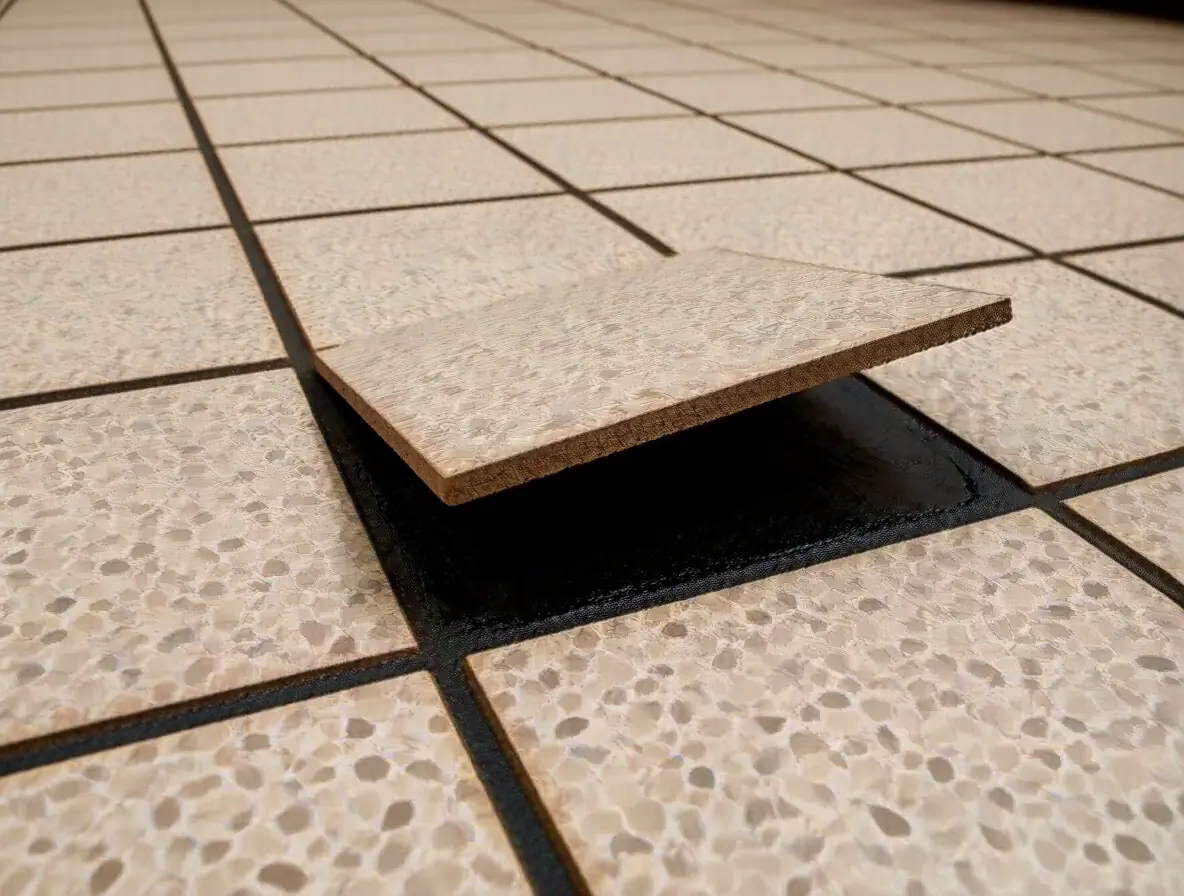
Why old flooring is a common asbestos source
Asbestos made vinyl and asphalt floor tiles tougher and longer-lasting, so manufacturers used it for decades. In older Murfreesboro, Nashville and Franklin homes it’s common to find several layers of flooring stacked on top of each other, with the oldest, most likely to contain asbestos, at the bottom.
The typical suspects:
- 9×9 inch vinyl-asbestos or asphalt tiles, very common in basements, kitchens and older commercial spaces.
- 12×12 vinyl tiles installed before about 1980.
- Sheet vinyl and linoleum, where the paper-like backing often contained asbestos.
- Black mastic, the dark, tar-like glue used to stick down tiles and sheet flooring.
- Acoustic ceiling tiles in dens, basements and offices.
Testing floor and ceiling tile
An inspector cuts a small piece of each layer of flooring and the adhesive below it, using wet methods so no dust escapes. Each distinct tile color or pattern and each adhesive is a separate sample. Lab results usually come back in a few days.
Cost is usually modest: often $25–$60 per sample at the lab, plus an inspector’s visit. A typical kitchen or basement floor needs two to four samples. See asbestos testing for how the process works.
Your options if your tile contains asbestos
Cover it
If the tile is intact and well stuck down, covering it is often the simplest and cheapest route. Floating floors (luxury vinyl plank, laminate, engineered wood) and carpet can go over it with an underlayment. Ask your flooring installer to avoid sanding or leveling the old tiles with grinders.
Remove it
Removal is the right call when tiles are loose or broken, when you need to get down to the subfloor (for example, to fix rot or level a floor), or when a buyer wants it gone. Licensed crews:
- Contain the room and set up HEPA air filtration.
- Wet the tiles and lift them whole with hand tools to avoid breaking them.
- Remove the mastic with a low-odor solvent or approved method, never by dry grinding.
- Bag, label and dispose of the waste at a permitted landfill.
- Clean and clear the area so your flooring installer can start.
Floor tile removal cost
Asbestos floor tile and mastic removal in Middle Tennessee often runs about $3–$8 per square foot, with minimum charges of around $1,000 or more for small rooms because of setup and disposal. Multiple layers, glued-down plywood and heavy mastic push the price up. Our cost guide has more detail.
Never sand, grind or shot-blast old floor tile or black mastic unless testing has shown no asbestos. Floor grinders turn intact, low-risk tile into airborne dust.
Remodeling a kitchen or basement?
Floors are only one part of the picture. Kitchen and basement remodels often also disturb drywall joint compound, popcorn ceilings and old pipe insulation. If you’re doing more than one room, a full pre-renovation inspection can be more efficient than testing materials one at a time.
Floor tile testing and removal near you
We connect homeowners with licensed pros in Murfreesboro, Smyrna, La Vergne, Nashville, Franklin and Brentwood. Call (615) 000-0000 or use the form.