Why test for asbestos?
You can’t identify asbestos by eye. A popcorn ceiling from 1975 might be loaded with it; the same-looking ceiling next door might have none. Lab testing is the only way to know, and it’s the first step before any renovation, repair or sale of an older home.
Homeowners in Murfreesboro and across Rutherford County usually call for testing when:
- They want to scrape a popcorn ceiling or tear out old flooring.
- A home inspector noted “possible asbestos-containing material” during a sale.
- A water leak, fire or storm has damaged old ceilings, walls or insulation.
- They found vermiculite in the attic or pipe wrap in the crawl space.
- They’re planning a kitchen or bathroom remodel or knocking out a wall.
- A contractor asked for a test result before they’ll start work.
What gets tested
An accredited inspector can sample almost any building material. The most common in Middle Tennessee homes are:
| Material | Where you’ll find it | Common era |
|---|---|---|
| Popcorn / acoustic ceiling texture | Bedrooms, living rooms, hallways | 1950s–early 1980s |
| 9×9 floor tile and black mastic | Kitchens, basements, under carpet | 1920s–1970s |
| Sheet vinyl flooring backing | Kitchens, bathrooms, laundry | 1950s–1980s |
| Drywall joint compound, wall texture | Throughout the house | Before about 1980 |
| Vermiculite insulation | Attics, inside block walls | 1920s–1990 |
| Pipe and duct wrap | Basements, crawl spaces, furnace rooms | Before about 1980 |
| Cement siding and roof shingles | Exterior walls, older roofs | 1920s–1980s |
Not sure what you’ve got? Describe it when you call or fill in the form and the inspector will tell you whether it’s worth testing.
How professional asbestos testing works
- Walk-through. The inspector looks at the materials you’re concerned about, and any others that the planned work would disturb.
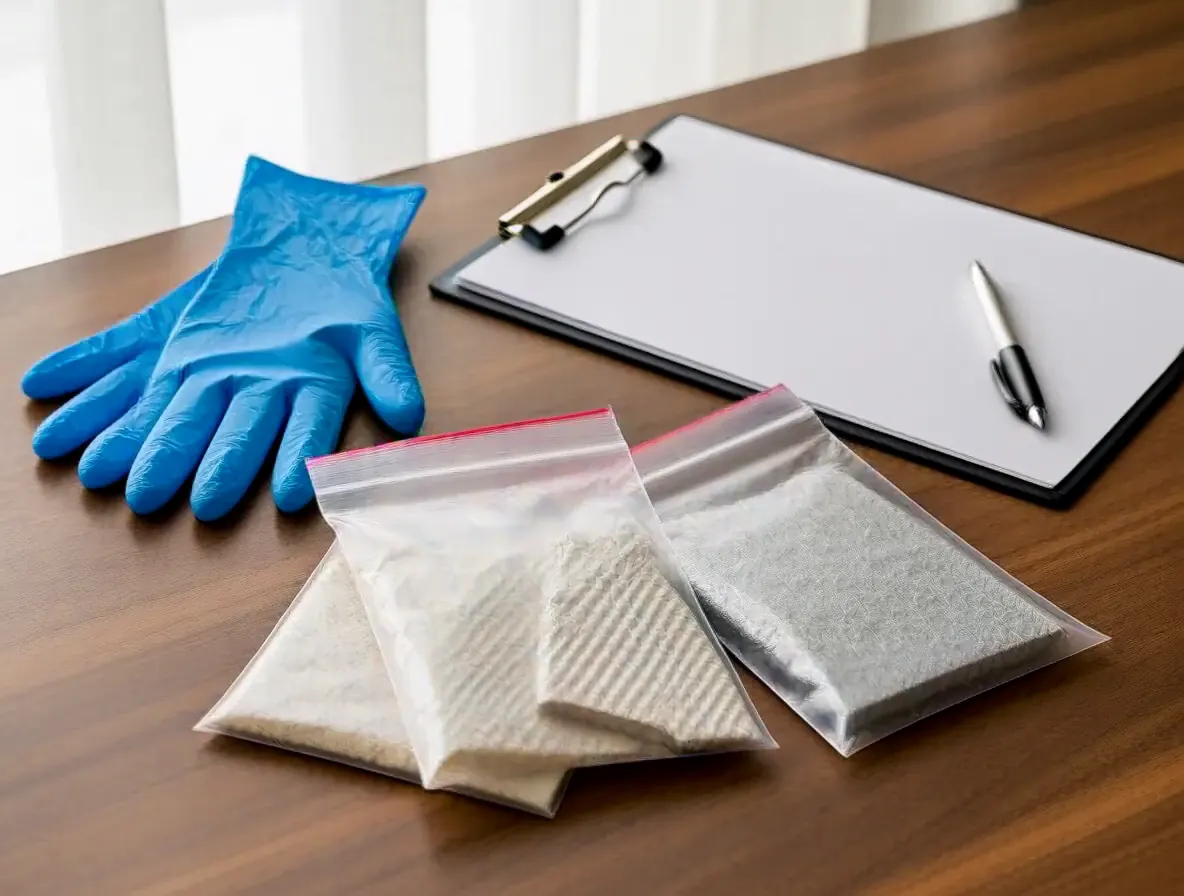
- Careful sampling. They wet the material to keep dust down, cut a small piece with clean tools, seal it in a labeled bag, and patch or seal the spot afterward. It takes a few minutes per sample.
- Accredited lab analysis. Samples go to a lab accredited for asbestos analysis, usually using polarized light microscopy (PLM).
- Results and advice. You get a lab report showing which materials contain asbestos and roughly how much. A good inspector will also explain what it means for your plans.
Testing vs. a full inspection
If you only care about one material, like a single popcorn ceiling, spot testing of that material is enough. If you’re doing a big remodel, a demolition, or you want a complete picture before buying or selling, a full asbestos inspection is better. The inspector surveys every suspect material in the work area and gives you a written report that contractors can rely on.
What does asbestos testing cost?
Prices vary by company and how quickly you need results, but typical Middle Tennessee ranges are:
- Lab analysis per sample: about $25–$60 (rush service costs more).
- Inspector visit with a few samples: often $250–$500.
- Full home inspection with report: often $400–$800+, depending on size.
See the full cost guide for removal prices and what affects the total.
What about DIY asbestos test kits?
You’ll see mail-in kits at hardware stores and online. They send your sample to a real lab, and the lab result can be accurate. The weak point is you. To take a sample you have to cut into the material, which is exactly the kind of disturbance that releases fibers. People also tend to sample only the top layer, or one spot of a ceiling that was patched with different products over the years.
A kit may be fine for satisfying your curiosity about a small, intact item. But if you’re about to remodel, sell or buy, or if the material is already damaged, a professional sample with a documented chain of custody is safer and carries more weight with buyers, lenders and contractors.
Material samples vs. air testing
Most home testing is bulk sampling: a small piece of the suspect material (ceiling texture, tile, mastic, insulation) goes to an accredited lab, which reports whether it contains asbestos, what type and roughly how much. That answers the question “is this material asbestos?”, and it’s what you need before a renovation or a sale.
Air testing answers a different question: are there asbestos fibers in the air right now? It’s useful after something has been damaged or disturbed, and it’s the standard way to confirm a work area is clean after removal (called clearance testing). An air test can’t tell you whether a ceiling or floor contains asbestos, so for most homeowners it comes after material testing, not instead of it.
If the results come back positive
Don’t panic. Asbestos that is in good condition and won’t be disturbed can often be left in place. Your options usually include:
- Leave it alone and keep an eye on its condition.
- Encapsulate it: seal it with a coating, or cover it (for example, new flooring over old tile, or new drywall over a ceiling).
- Remove it with a licensed abatement contractor, which is usually the right call before a major renovation. Learn more on our asbestos removal page.
Until you have results: treat the material as if it contains asbestos. Don’t sand, scrape, drill or sweep up debris from it, and keep kids and pets away from any damaged areas.
Already disturbed something? What to do right now
It happens. A ceiling gets scraped, a tile cracks during demo, or a contractor tears into pipe wrap before anyone tested it. If you think you’ve disturbed asbestos:
- Stop work in that area and keep everyone, including pets, out. Close the door.
- Don’t sweep, dust or vacuum the debris. A regular vacuum blows fine fibers back into the air, and the EPA specifically warns against it.
- Turn off the heating or air conditioning that serves that room if you can, so dust isn’t pulled through the ducts.
- Don’t track it through the house. Bag dusty work clothes and wash them separately.
- Get the material tested. If it’s positive, have a licensed abatement contractor clean up. An air test can show whether fibers spread to other rooms.
A single short exposure is very different from years of regular exposure, so try not to panic. If you’re worried about your health, talk to your doctor.
Asbestos testing near you
We arrange testing throughout Murfreesboro, Smyrna, La Vergne, Nashville, Franklin and Brentwood, plus the rest of Rutherford County. Call (615) 000-0000 or use the form and a licensed inspector will reach out to schedule a visit.